

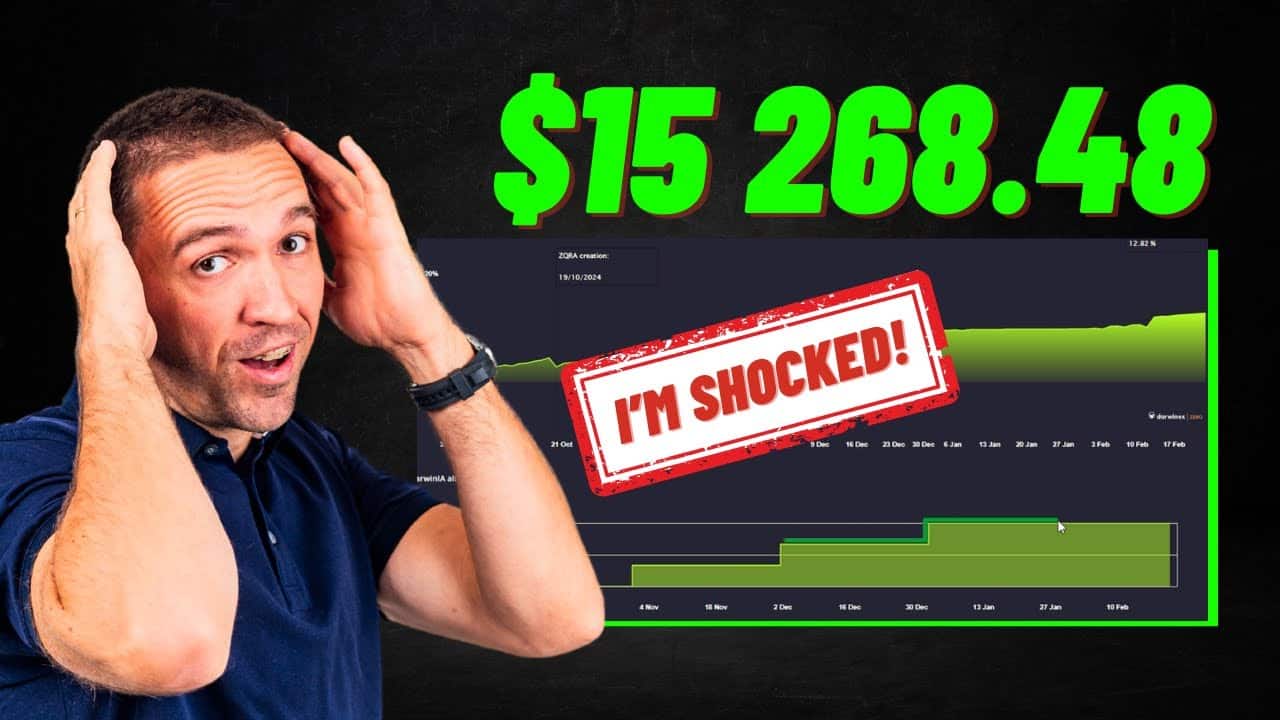
So you have decided to start your journey as a trader. But at the beginning of this path, you are faced with an important decision: choosing the right trading account. There are various options available when it comes to trading accounts, and you must carefully evaluate which account type offers the best balance of profitability, risk, and accessibility. Whether you prefer trading with your own capital, using a funded account, leveraging hedge fund allocations, or scaling through a capital allocation platform, each option comes with unique advantages and challenges. So, which is the best trading account for beginners? Let us have a look.
In this article, we analyze four popular account types: Live Trading Accounts, Instant Funded Accounts, Hedge Fund Accounts, and Darwinex Zero, specifically in the context of automated trading with Expert Advisors (EAs). To ensure a fair comparison, we base our evaluation on an EA that generates a 2% monthly return average, examining how different accounts perform over one year and projecting their profitability in the long run.
Our research goes beyond marketing promises, providing a clear, data-driven look at what beginners can realistically expect. By the end, you will have a clear understanding of which account type aligns with your goals and offers the best opportunity for growth.
Quick Picks
| Goal | Best Account Type |
| Learning the platform with zero risk | Demo account |
| First live trade with minimal financial exposure | Cent account |
| Controlled real-money position sizing | Micro account |
| Regular trading after proven consistency | Standard account |
| Tight spreads for scalping or algo trading | ECN/Raw spread account |
| Capital access without a large personal deposit | Funded/prop account |
| Long-term scaling through verified performance | Darwinex Zero (capital allocation) |
Account Types at a Glance: Full Comparison Table
| Account Type | Min. Deposit | Lot Size | Spreads | Risk to Trader | Profit Split | Termination Risk | Best For |
| Demo | $0 | Any | Simulated | None | N/A | None | Platform learning, strategy testing |
| Cent | $5 to $50 | Micro (0.001) | Variable | Very low | 100% | None | First live experience, EA testing |
| Micro | $50 to $200 | Micro (0.01) | Variable | Low | 100% | None | Transitioning from demo to live |
| Standard | $100 to $500+ | Standard (0.1+) | From 0.6 pips | Medium | 100% | None | Regular trading after experience |
| ECN/Raw | $200 to $1,000+ | Variable | From 0.0 pips + commission | Medium/High | 100% | None | Scalpers, algo traders, active traders |
| Funded/Prop | $50 to $250 (fee) | Variable | Broker-dependent | Low (personal) | 70 to 90% | Yes (drawdown breach) | Traders with proven strategies |
| Darwinex Zero | ~$35 to $45/mo | Risk-adjusted | Live market | Very low (personal) | 85% (15% fee kept by Darwinex) | No | Long-term systematic and algo traders |
Demo vs Cent vs Micro vs ECN: Detailed Comparison
| Feature | Demo | Cent | Micro | ECN/Raw |
| Real money involved | No | Yes | Yes | Yes |
| Min. deposit | $0 | $5 to $50 | $50 to $200 | $200 to $1,000+ |
| Pip value (EUR/USD, 0.01 lot) | Virtual | ~$0.001 | ~$0.10 | ~$0.10 |
| Spreads | Simulated live | Wider (1.5 to 3 pips typical) | Variable (0.6 to 1.5 pips) | From 0.0 pips + commission |
| Commission | None | None typically | None typically | $3 to $7 per round-turn lot |
| Emotional realism | None | Low but present | Moderate | High |
| EA testing suitability | Good for logic testing | Excellent for live condition testing | Good | Best for live deployment |
| Leverage available | Same as live | Up to 1:500 (offshore) / 1:30 (ASIC/FCA) | Same | Same |
| Platforms supported | MT4, MT5, cTrader, TradingView | MT4, MT5 (most brokers) | MT4, MT5 | MT4, MT5, cTrader |
| Account termination risk | None | None | None | None |
| Suitable for complete beginners | Yes, first step | Yes, second step | Yes, third step | No, requires experience |
| When to move on | When consistently profitable on demo | When comfortable with real-money pressure | When ready to scale position sizes | When strategy is proven and consistent |
Live Trading Account
A live trading account is the most straightforward way to enter the markets. With this approach, you open an account with a regulated broker and deposit funds. So, let us say you invest $400 in a live account, find an EA that makes an average of 2% per month, and start trading. You have no target and no drawdown limit set by a third party, so the profit split is 100%, meaning you can withdraw all the profits.
After deducting a 5% commission on trades, which is standard with many brokers, you end up with $91 in profit over one year. This is the result of a consistent 2% return per month. Since you own the account, there are no restrictions on trading strategies and you have full control over withdrawals. This makes a live account a safe and flexible option for beginners who want to trade at their own pace.
However, the biggest drawback is the limited growth potential. Even with a profitable EA, a small account balance significantly restricts your earnings. While making nearly $100 on a $400 investment in a year is a positive return, it is not enough to scale your trading into a substantial income stream. Unlike funded accounts or capital allocation platforms, a live account does not provide access to larger capital, meaning you are solely dependent on your own investment for growth.
Another challenge is that many beginner traders struggle with emotional decision-making when trading their own funds. While an EA removes some of the psychological pressure, account drawdowns can still cause anxiety and lead to poor decisions such as disabling the EA at exactly the wrong moment.
Instant Funded Account
An instant-funded account, also known as a prop firm account, provides traders with access to larger capital without requiring a significant personal investment upfront. Instead of depositing your own money, you pay a one-time fee to access a funded account, typically ranging from $50 to $250 depending on the firm and account size.
With a funded account of $1,500 and a 2% monthly return, you would generate $360 in profit over one year before the profit split. After applying a typical 80% profit split, you take home $288. While this is more than the $91 from the live trading account, the difference becomes far more significant at larger account sizes.
The main advantage of instant funded accounts is the ability to trade with significantly more capital than you could personally afford. This amplifies both profits and losses, but with an EA maintaining consistent risk management, the downside risk is controlled.
The key challenge is the profit target and drawdown restrictions imposed by the prop firm. Most funded accounts require traders to hit a profit target, typically around 8 to 10%, while staying within a maximum drawdown limit of 5 to 10%. Breaching these rules results in losing the funded account and the initial fee paid to access it. For algorithmic traders running EAs, this structure creates a specific risk: a temporary drawdown that exceeds the firm’s limit ends the account even if the strategy would have recovered given more time.
Hedge Fund Account
A hedge fund account, in the context of retail algorithmic trading, refers to platforms that allocate institutional or investor capital to verified profitable traders. This is the highest-tier option in terms of capital access and earning potential, but it requires the most demonstrated track record before any allocation is granted.
With a $3,000 starting scenario and a 2% monthly return, a hedge fund allocation model can generate substantially more over time than either a live account or a basic funded account. The key variable is the allocation multiplier: if your verified strategy earns consistent returns with low drawdown, the capital allocated to your account grows, and your 15 to 20% performance fee is calculated on an increasingly larger base.
The barrier to entry is higher. You need a verified track record, typically several months of consistent performance, before meaningful allocation arrives. This makes hedge fund-style accounts less immediately accessible for complete beginners, but for traders running a robust automated strategy, it is the most scalable long-term option.
Darwinex Zero
Darwinex Zero is a subscription-based capital allocation platform that occupies a unique position between a prop firm and a hedge fund model. It is not a pass/fail challenge. It does not terminate your account for a drawdown event. And it does not require you to deploy your own trading capital beyond the monthly subscription fee.
How Darwinex Zero Works
You pay a monthly subscription of approximately $43, or €38, depending on your location. A discount code reduces this by 20%, bringing the monthly cost down to around $34. Annual and three-year subscription options are also available for those committed to the long term.
At signup, you choose between MetaTrader 4 and MetaTrader 5. If you want to trade US stocks and ETFs in addition to forex and CFDs, MT5 is the right choice. Once your payment is processed and your email is verified, you receive your MetaTrader account credentials immediately, including your login number, master password, and server details.
Your account starts with $100,000 in capital. Behind that account is a risk engine that normalizes the risk of every strategy on the platform, running each one at a proportionate lot size relative to its historical volatility. This puts all strategies on an equal footing and allows Darwinex to identify genuinely good traders rather than those who simply take high risk for high reward.
Capital Allocation and Performance Fees
Once you prove your strategy is consistently profitable and maintains an acceptable drawdown, Darwinex begins allocating real investor capital to your account. You earn a 15% performance fee on all profits generated from that allocated capital, exactly as a professional fund manager would.
There is also the option to purchase permanent allocation, a fixed base of investor capital that remains allocated to your account as long as you continue to trade profitably and maintain your subscription. This permanent allocation compounds the earning potential significantly over time.
The No-Termination Advantage
The most important structural difference between Darwinex Zero and traditional prop firms is what happens during a drawdown.
Petko has opened over 50 Darwinex Zero accounts over several years and has traded different strategies and Expert Advisors across them. On one account running the Sharpshooter strategy, the EA was profitable from the beginning of 2025 through to the end of July, receiving an allocation that grew to a maximum of €255,000. Then the Sharpshooter experienced a significant drawdown of 30% in MetaTrader terms.
At a traditional prop firm, this would have ended the account. At Darwinex Zero, it did not. Because Darwinex’s risk engine was running the strategy at approximately one-third of the standard lot size at that time, the 30% MetaTrader drawdown translated to less than 12% in Darwinex terms, and stayed below the 10% threshold that would typically concern a risk manager. The account remained open. Some allocation was lost during this period, but the account continued trading. The EA recovered, proved its profitability again, and allocation was restored.
This is the critical point: with Darwinex Zero, you keep the account as long as you pay the subscription fee. You do not lose it for a drawdown. You continue trading, and when your strategy recovers and proves profitable again, you can withdraw performance fees once more.
Real Performance Numbers
On Petko’s Darwinex account with a purchased permanent allocation of €100,000, the strategy met the required performance threshold to begin drawing on that allocation within six days of February 18, 2026. With the permanent allocation of €100,000 and the current dynamic allocation of €30,000, the total allocated capital is €130,000. At the expected rate of return for that month, the performance fee projected from the permanent allocation alone is over €1,200. Adding the performance fee from the €30,000 dynamic allocation brings the total expected payout to approximately €1,300 for that single month.
From a cost perspective, the annual subscription is approximately €500. Against €1,300 in a single month of performance fees from allocated capital, the return on the subscription cost is substantial, provided the strategy maintains its consistency.
How to Get Started with Darwinex Zero
Setting up a Darwinex Zero account takes under ten minutes.
Go to the Darwinex Zero homepage, click Sign Up, and enter your email address, a username, and accept the terms and conditions. Select your platform (MT4 or MT5) and your asset class. If a discount code has been applied through a referral link, the price will be reduced automatically. If not, enter PETKO2 in the coupon field and click Apply to receive 20% off. Proceed through payment, verify your email address, and your account credentials will be provided immediately.
Download MetaTrader 5 (or MT4) from the Darwinex Zero platform by going to Get Started, clicking the three dots, and selecting Download Terminal. Install it in your Programs folder. When the platform opens, it connects to the Darwinex server automatically using the credentials provided.
Before attaching any EA, enable Algo Trading in MT5 (called Auto Trading in MT4). This is a required step; without it, EAs will not execute orders.
Adding an EA to Darwinex Zero
To get a free EA from the MQL5 Marketplace via Algo Trading Space, go to ea.algotradingspace.com, click Add to Cart, register or log in if prompted, and proceed to checkout at zero cost. At the download page, select either the MT4 or MT5 version depending on your platform. This takes you to the MQL5 Marketplace, where you will need an MQL5 account to download. Copy the MQL5 download URL, open it in the browser on the same machine where MetaTrader is installed (if using a VPS, do this step on the VPS itself), and when prompted whether MetaTrader 5 is installed, confirm yes. The EA installs directly into the platform.
Find the EA in the Expert Advisors section of your MetaTrader Navigator panel. Drag it onto the chart for the currency pair and timeframe you want to trade. In the Inputs tab, review and adjust the settings: risk percentage per trade, lot size, and any grid or stop-loss parameters relevant to that EA. A risk of 1 to 2% per trade is a reasonable starting point. Click OK to attach the EA. Confirm the small robot icon appears in the top-right corner of the chart, indicating the EA is active and trading.
Backtesting within Darwinex Zero before going live is strongly recommended. Right-click the EA in the Navigator, click Test, set the symbol, timeframe, date range, and starting balance to $100,000 (the Darwinex starting capital). Set leverage to approximately 1:25 to reflect Darwinex’s more conservative conditions. Run the backtest and compare the equity curve and drawdown profile to the developer’s published results. If they are broadly similar, it provides meaningful confidence in the EA’s behaviour on that specific broker’s data.
Who Darwinex Zero Is Best For
Darwinex Zero is best suited for traders who have a tested, systematic strategy, either manual or automated, that they intend to run consistently for the long term. It is not the right starting point for complete beginners who have not yet developed or validated a strategy. The monthly subscription is a real cost, and it takes time to build the track record required to receive meaningful allocation.
For traders running algorithmic strategies with EAs, Darwinex Zero is one of the most compelling long-term scaling vehicles available. The combination of no account termination for drawdown, a transparent risk engine, growing capital allocation for consistent performers, and a 15% performance fee structure creates a pathway to significant income from algorithmic trading without requiring large personal capital at risk.
Mid-size Accounts
For traders sitting between the small live account and the larger capital allocation models, mid-size scenarios with $1,500 to $5,000 of personal capital provide a meaningful stepping stone. At this level, the returns from a 2% monthly EA strategy become more tangible in absolute dollar terms, and the trader has enough capital to manage position sizing properly while absorbing normal drawdown periods without the emotional pressure of a nearly empty account.
A $3,000 live account generating 2% monthly with 100% profit ownership produces approximately $680 in annual profit after broker commission. While still modest in absolute terms, it provides real-world experience with meaningful numbers and builds the track record useful for applying to funded platforms or Darwinex allocation in the future.
Other Account Types to Know
For traders who are earlier in their journey and not yet ready for the ROI-focused comparison above, understanding the foundational account types provides important context.
Demo account: Uses virtual funds, costs nothing, and carries no financial risk. Essential for learning a platform and testing strategies before committing real capital. Every beginner should spend meaningful time on a demo before opening any live account. A demo account does not replicate trading psychology, but it is the right first step for learning the mechanics.
Cent account: A live account where balances are denominated in cents rather than dollars. A $10 deposit appears as 1,000 cents in the platform. Financial exposure is reduced by a factor of 100 compared to a standard account, making it the safest way to experience real market conditions and real trading psychology without significant capital at risk. Cent accounts are particularly useful for testing EAs in live market conditions before scaling to larger accounts.
Micro account: Operates in real currency but allows trading in micro lots (0.01 lot = 1,000 units of the base currency). At 0.01 lots on EUR/USD, one pip equals approximately $0.10. This allows proper 1% risk-per-trade discipline on accounts of $100 to $500 without the artificially reduced denomination of a cent account. A natural progression step between cent and standard accounts.
Standard account: The most common retail trading account. Trades in standard lots with spreads typically from 0.6 to 1.5 pips on major pairs and no separate commission. Suitable for traders who have built consistency on smaller accounts and are ready to scale.
ECN/Raw spread account: Routes orders directly to institutional liquidity providers with spreads from 0.0 pips and a separate commission per lot. The natural environment for algorithmic trading and scalping strategies. IC Markets, Pepperstone, and FP Markets are well-known regulated ECN brokers used at Algo Trading Space for live algorithmic trading.
The recommended progression for most beginners is: demo account, then cent account, then micro account, then standard or ECN account. Move to each level only after demonstrating consistent results at the previous level.
Frequently Asked Questions
What is the best trading account type for beginners?
For most beginners, the recommended progression is demo account first, then cent account, then micro account, and eventually a standard or ECN account once consistent profitability is demonstrated. There is no single best account for everyone; the right choice depends on available capital, strategy maturity, and experience level.
Beginners who rush to standard or ECN accounts before developing consistent results on smaller accounts are the most likely to lose their capital quickly.
How much money do I need to open a trading account?
A demo account requires no money at all. A cent account can be opened with as little as $5 to $10 at many regulated brokers. A micro account typically requires $50 to $200. A standard account varies from $100 to $500 depending on the broker.
A Darwinex Zero account requires a monthly subscription of approximately $35 to $45, with no minimum trading deposit beyond that. The important principle is to start with the minimum comfortable amount while learning, and only scale up once results are consistent.
Are funded accounts good for beginners?
Generally no. Funded prop firm accounts are best suited for traders who already have a tested, consistently profitable strategy. The challenge structure and drawdown limits create pressure that tends to produce poor risk management decisions among inexperienced traders.
Beginners are better served building a track record on a cent or micro account first, then pursuing funded accounts once they have documented evidence that their strategy works.
Is a demo account enough to start trading?
A demo account is essential but not sufficient on its own. It teaches platform mechanics and strategy logic very well, but it does not replicate the psychological pressure that comes with real money being at risk. Many traders perform consistently on demo and then struggle on live accounts because the emotional environment is completely different.
Transitioning to a cent account after demo practice introduces real-money psychology at minimal financial exposure, which is a necessary step before scaling further.
What leverage should beginners use?
Beginners should use the lowest effective leverage that allows their strategy to function. Under ASIC and FCA regulation, retail traders are capped at 1:30 on major forex pairs. Even within this limit, many beginners over-leverage by opening positions that are too large relative to their account balance.
Starting with micro lots (0.01) on a $200 to $500 account creates very low effective leverage regardless of the maximum available, and significantly reduces the risk of rapid account losses.
What is the difference between a cent account and a micro account?
A cent account denominates your balance and all profits and losses in cents rather than dollars. If you deposit $10, your platform shows 1,000 cents, and one pip on a 0.01-lot trade is worth approximately $0.001. A micro account operates in real currency with smaller lot sizes: at 0.01 lots on EUR/USD, one pip equals approximately $0.10.
Both are low-risk live accounts designed for beginners, but cent accounts provide even lower financial exposure and are better suited to the very earliest stage of live trading. Micro accounts are more structurally similar to standard accounts and suit traders ready for the next step up.
Is Darwinex Zero suitable for beginners?
Darwinex Zero is not the right starting point for complete beginners who have not yet developed and tested a strategy. The monthly subscription is a real cost, and it takes time to build the performance track record required to receive meaningful capital allocation.
It is most suitable for traders who already have a tested EA or systematic strategy they plan to run for the long term. For that profile of trader, Darwinex Zero is one of the most compelling scaling vehicles available, primarily because it does not terminate accounts for drawdown events, unlike traditional prop firms.
Can I run Expert Advisors on all account types?
Yes. Expert Advisors on MetaTrader 4 and MT5 can be deployed on demo, cent, micro, standard, and ECN accounts, as well as on Darwinex Zero. Cent accounts are particularly useful for testing EAs in live market conditions with minimal financial risk before scaling to larger accounts.
ECN accounts are preferred for live EA deployment due to tighter spreads and faster order execution. Darwinex Zero is specifically designed to support long-term algorithmic trading, with its risk engine normalizing EA performance to allocate capital based on consistent results rather than raw return figures.
Final Thoughts
There is no single best trading account for every beginner. The right choice depends on your available capital, your current skill level, your strategy, and your long-term goals.
If you are just starting out and have no tested strategy yet, begin with a demo account, then a cent account. Learn the platform, develop a strategy, and build discipline before putting meaningful capital at risk.
If you have a consistently profitable EA or systematic strategy and want to scale without deploying large personal capital, Darwinex Zero is the most compelling option for algorithmic traders specifically. Its no-termination model, transparent risk engine, and growing allocation structure make it structurally different from every other account type covered in this guide. The key trade-off is the monthly subscription cost and the time required to build the performance record that attracts meaningful allocation.
If you want capital access without a subscription and you have a proven strategy, instant funded prop accounts are the faster route to larger capital. The risk is account termination on a drawdown breach, which makes them less forgiving for strategies that experience volatile periods.
If your goal is the highest absolute return potential and you are willing to invest the time to build a verifiable track record, hedge fund allocation models and Darwinex permanent allocation represent the top of the scaling ladder.
For most beginners reading this article, the honest answer is: start small, trade consistently, document your results, and let the quality of your strategy determine which of these paths you pursue. The account type is secondary to the quality of the trading approach behind it.


Comments
No comments yet. Be the first to comment!
Leave a Comment
Your email address will not be published. Required fields are marked with *